
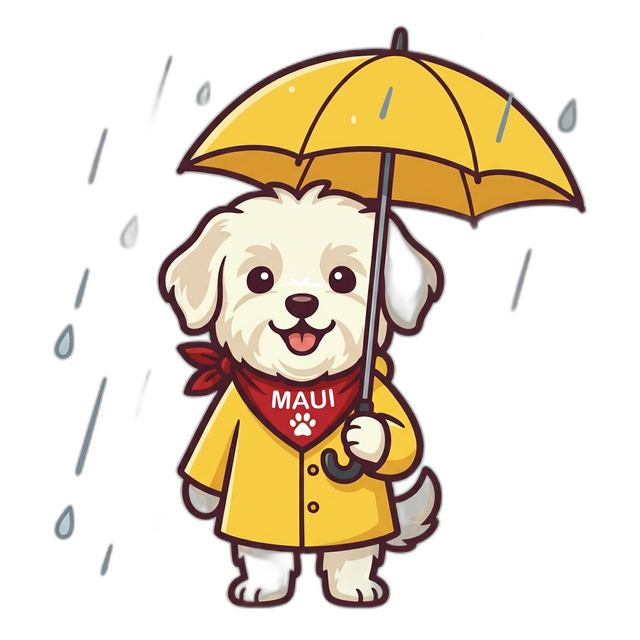
Let's be honest: if you own a dog in the Pacific Northwest, you've accepted a certain level of chaos into your life. Your car smells like wet dog. Your entryway has a permanent mud zone. You own more dog towels than bath towels. You've said the words "please don't roll in that" at least once this week.
This is the reality of raising a dog in a region that gets rain 150+ days a year. But it doesn't have to be a disaster. Here's how to survive — and maybe even enjoy — life with a PNW dog.
The Mud Problem (And Why Your Groomer Charges Extra for It)
Mud isn't just a cosmetic issue. When mud dries into your dog's coat, it creates tight mats that pull on the skin and trap moisture against it. Left unchecked, this leads to hot spots, bacterial infections, and a very unhappy dog.
The worst areas for mud buildup:
- Behind the ears — where the collar rubs
- Under the armpits — friction + moisture = matting
- Belly and chest — low to the ground, catches everything
- Leg feathering — those beautiful flowing leg hairs on Goldens, Setters, and Doodles are mud magnets
- Between paw pads — where debris lodges and irritates
The golden rule: Brush damp fur before it dries. Once a mat dries, it sets like concrete. A five-minute brush-out after a muddy walk prevents a $50 de-matting surcharge at the groomer.
Keep a slicker brush and a spray bottle of detangling conditioner by your door. Quick brush-out before your dog settles onto the couch = less drama for everyone.
The Wet Dog Smell Is Real (And Fixable)
That famous wet dog smell isn't just water on fur. It's caused by microorganisms — bacteria and yeast — that live naturally on your dog's skin. When the coat gets wet, those organisms become more active and release volatile compounds. The damper your dog stays, the more potent the smell.
How to fight it:
- Dry thoroughly. This is the single most impactful thing you can do. Towel-dry, then use a blow dryer on low heat. Never let your dog air-dry in cold weather — it makes the smell worse and can cause hot spots.
- Use a quality shampoo. Professional-grade grooming shampoos (not drugstore human shampoo) clean more effectively and leave the coat smelling better for longer.
- Groom more frequently in winter. Consider every 4–6 weeks during the rainy months instead of your usual 6–8 week schedule.
- Consider mobile grooming. A groomer with a professional high-velocity dryer can get your dog completely dry in ways a home blow dryer simply can't. Mobile groomers in Seattle and Portland come to your door — no loading a wet dog into the car.
Your Dog's Ears Are Suffering (And They Can't Tell You)
Floppy-eared breeds — Golden Retrievers, Labradoodles, Cocker Spaniels, Basset Hounds — are especially prone to ear infections in the PNW. Those adorable ears act like a lid, trapping moisture inside the ear canal. Warm, damp, dark = a perfect environment for yeast and bacteria.
Signs of an ear infection:
- Head shaking or tilting
- Scratching at ears
- Redness or swelling
- Dark discharge or unusual smell
- Sensitivity when you touch the ears
Prevention:
- Dry ears thoroughly after every wet walk — gently wipe the inside with a cotton ball
- Never stick anything into the ear canal (no Q-tips)
- Ask your groomer to clean ears at every appointment during rainy season
- If your dog swims (Lake Washington, the Willamette, any of our million creeks), dry ears immediately after
The PNW Paw Survival Kit
We don't have the road salt problem that East Coast and Midwest dogs deal with, but PNW paws have their own set of challenges:
Mud between pads. Hair growing between the paw pads acts like a wick, pulling mud and water up into the foot. Keep this hair trimmed short. Your groomer can do this at every appointment, or you can carefully trim it yourself with blunt-tipped scissors.
Softened paw pads. Constant wet conditions soften the pads, making them more prone to cracking and splitting. Apply paw balm (Musher's Secret is the PNW gold standard) before walks as a moisture barrier.
Trail debris. If you hike — and if you live in the PNW, you hike — check your dog's paws after every trail walk. In late summer and early fall, foxtails (barbed grass seeds) are a serious hazard on dry PNW trails. They burrow into the skin, paws, and ears and can require veterinary removal.
The post-walk routine:
- Warm water rinse (keep a shallow bin by the door)
- Dry between every toe — not just a quick towel
- Check for debris, cuts, or irritation
- Paw balm if pads look dry or cracked
What About Dog Rain Gear?
The PNW has a complicated relationship with rain gear — for humans and dogs alike. Here's the honest take:
Dog rain jackets: Actually useful for short-coated breeds (Whippets, Pit Bulls, Boxers) who don't have a water-resistant undercoat. Also good for senior dogs. For thick-coated breeds, a rain jacket can trap moisture and make things worse.
Dog boots: Most dogs hate them. Useful if you're hiking in snow or on salted roads near ski areas (Crystal Mountain, Mt. Hood), but for daily PNW rain walks, a good paw care routine is more practical.
Belly bands: These fabric wraps protect the underside from mud on walks. They're having a moment, and honestly? For PNW Doodle owners, they might be the single best $20 investment you can make.
Don't force rain gear on a dog who hates it. Stress is worse for your dog than a little rain. Instead, invest in a solid post-walk routine and more frequent grooming.
The Breeds That Have It Hardest in the PNW
Not all dogs are equally challenged by our weather. Here's who needs the most grooming attention:
Goldendoodles and Labradoodles — The curly coat that makes them hypoallergenic also makes them mat magnets in wet weather. Their coats absorb moisture like a sponge. Budget for grooming every 4–6 weeks year-round, and brush at least every other day in winter.
Golden Retrievers — Seattle's most popular breed (per the Seattle Times, year after year). That gorgeous feathered coat collects every leaf, stick, and mud puddle in King County. They need professional grooming every 6–8 weeks plus serious home brushing.
Bernese Mountain Dogs — Thick, long, double-coated, and they love rolling in everything. Beautiful dogs. Expensive grooming bills.
Any white or light-colored dog — Let's just say that a white Bichon and a PNW mud puddle are natural enemies.
When to Call the Groomer vs. DIY
Not every muddy adventure requires a professional groom. Here's a quick decision framework:
DIY at home:
- Muddy paws and legs after a walk
- Light dampness from drizzle
- Routine brushing between appointments
- Ear drying after wet walks
Call the groomer:
- Full-body mud (the "I found a puddle at the dog park" situation)
- Any sign of matting you can't brush out easily
- Wet dog smell that won't go away after a home bath
- It's been 6+ weeks since the last professional groom
- Ear irritation, skin issues, or anything that looks infected
Embrace the Chaos
Here's the thing about being a dog owner in the PNW: you're going to get muddy. Your house is going to smell like wet dog sometimes. Your car's back seat has a permanent paw print pattern.
But you also get to hike through old-growth forests with your best friend, watch them sprint across Pacific beaches, and come home to a dog who's had the best day of their life — for the 800th day in a row.
A good groomer makes the mess manageable. The joy is on you.
Find groomers near you who understand what it means to keep a dog happy in the Pacific Northwest.
Sarah Clarke
Professional groomer and salon owner in Lakewood, WA with over 15 years of experience grooming dogs and cats of all breeds. Sarah learned the craft from her mother and carries on a family legacy of compassionate pet care.
![How Much Does Dog Grooming Cost in Seattle & Portland? [2026 Price Guide]](/blog-assets/grooming-cost-blog.png)